Our story
2018
The Arboretum
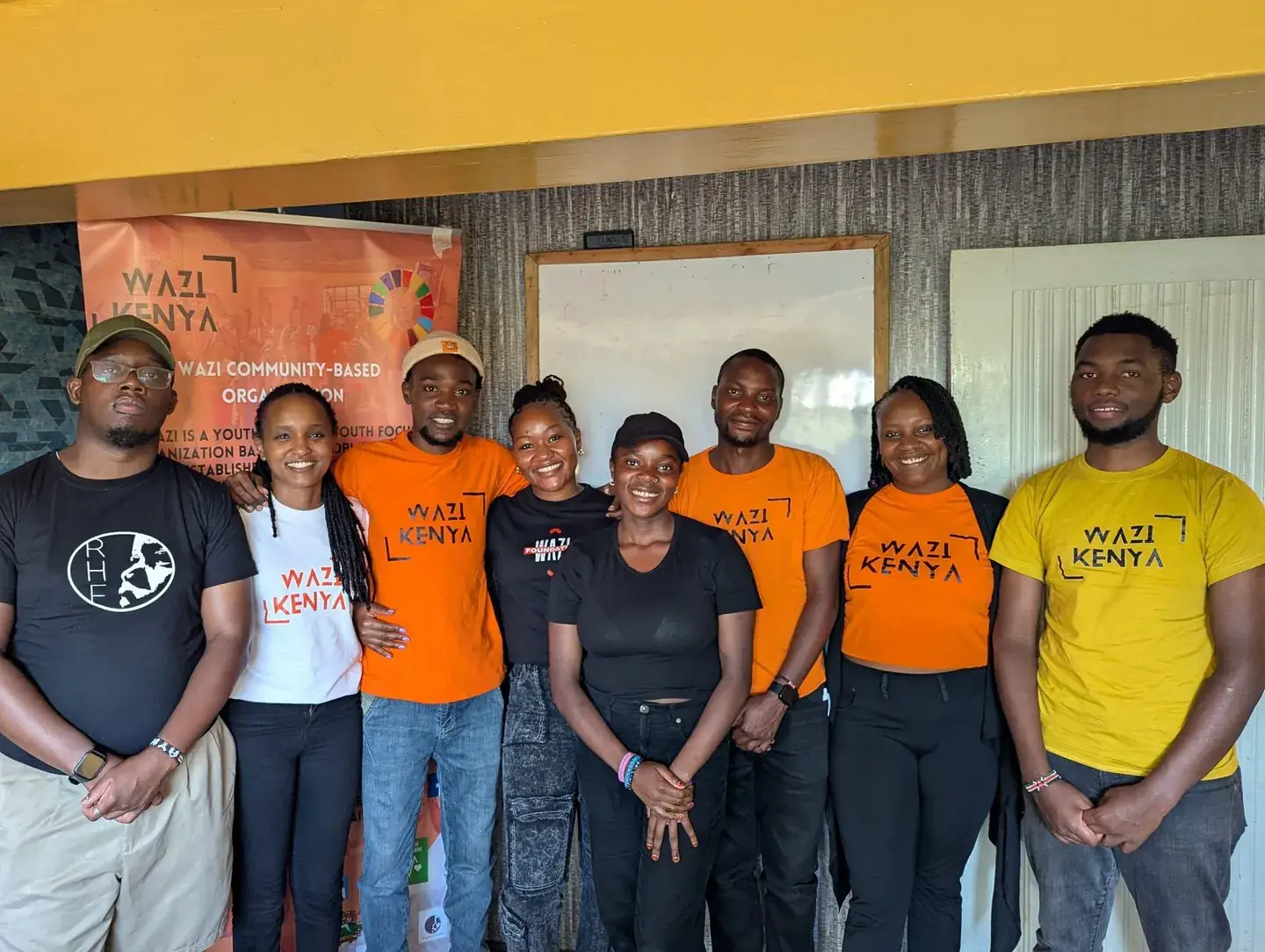
A group of friends at the Kenyatta University Arboretum created a small, safe, open space for honest conversations about mental health, ambition, doubt and the challenges of being young in Kenya. They called it Wazi: Swahili for "open", Sheng for "we have an understanding".
2019
Grassroots education
The conversations turned into work. Wazi began supporting under-resourced community learning centres with book drives, literacy campaigns and resource mobilisation for Change a Life Learning Center, Dandora Arts and Study Center, and Ufanisi Education Center. Mentorship for adolescents and young people followed.
2021
Return and strengthen
After a COVID-19 pause, Wazi returned focused on sustainability. The Organizational Development and Systems Strengthening (ODSS) program, run by AMREF Kenya and NEPHAK, helped build its governance, finance, monitoring and evaluation, and safeguarding systems.
2022 to 2023
Pilot to CBO
Be Kids Australia, through the Soko Mjinga Youth Leap Enterprise Grant, funded the first Wazi sanitary dispensers. Phase 1 launched at Kenyatta University with the KU Centre for Gender Equity and Empowerment and the KU Women's Economic Empowerment Hub: 7 dispensers and 1,000+ users in year one. In 2023 Wazi registered as a Community-Based Organization in Nairobi.
2025 to 2026
Four pillars, open doors
Phase 2 took the dispenser model into 6 schools across Ruaraka and one more university. The Innovating Dignity seminar at American Corner Moi University produced the 8 Principles of Menstrual Health, Hygiene and Dignity. Wazi was represented at UNEA-7 and the Global Major Groups and Stakeholders Forum. From 2026, Environment joins Health, Education and Advocacy as the fourth pillar.